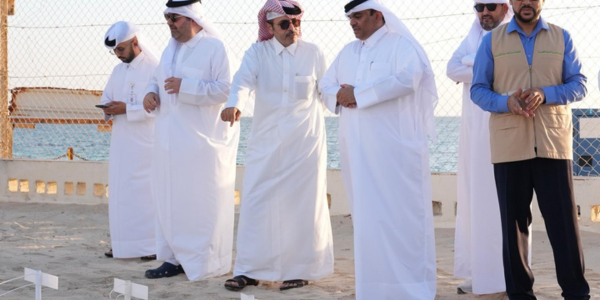

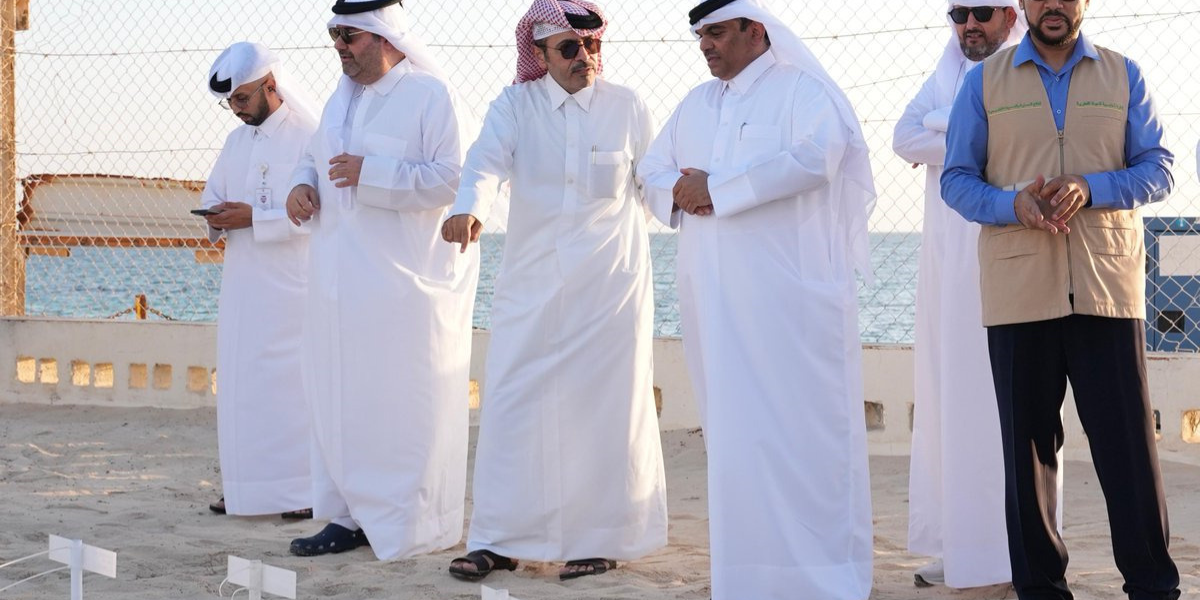
The Ministry of Environment and Climate Change (MECC) has announced the start of the sea turtle hatching and release season at Fuwairit Beach, marking a key step in Qatar’s ongoing efforts to safeguard biodiversity and protect endangered marine life.
In a statement issued Sunday, the Ministry revealed that 284 nesting events were recorded this season across seven major sites along the northern coastline, an increase compared to 219 events documented last year. Officials noted that this rise reflects the effectiveness of national conservation programmes aimed at protecting sea turtles and sustaining their natural habitats.
Field teams also observed several female hawksbill turtles returning multiple times in a single season to lay eggs. Through flipper identification tags, specialists confirmed repeat nesting visits by 15 turtles. One turtle completed four nesting cycles, while others returned two or three times. According to the Ministry, such patterns provide clear scientific evidence of successful conservation measures and a suitable environment for the reproduction of this endangered species.
The findings highlight the efficiency of ongoing monitoring and research initiatives led by specialized teams. These programmes include tracking sea turtles and gathering biological and environmental data, contributing to both national and regional conservation knowledge.
Protected nests monitored since the start of the season have begun to yield hatchlings, which are being released into the sea following carefully designed scientific protocols to maximize their survival rates. This process also enhances the likelihood that the turtles will return to Qatari shores in the future to continue their natural life cycle.
The Ministry reaffirmed its commitment to maintain monitoring and conservation efforts throughout the remainder of the season. These initiatives aim to protect sea turtles, preserve marine ecosystems, and strengthen Qatar’s role in biodiversity conservation.
The project is led by the Wildlife Development Department under the Protection and Nature Reserves Sector, in cooperation with the Nature Reserves Department and the Marine Protection Department. Activities include overseeing the nesting season, safeguarding nests, and managing the hatching and release phases in line with established scientific standards.
Launched in 2003, the sea turtle protection programme stands as one of Qatar’s leading environmental initiatives. Over more than two decades, it has played a significant role in the conservation of hawksbill turtles classified globally as an endangered species through integrated efforts such as field monitoring, nest protection, hatchling care, public awareness campaigns, and collaboration among national institutions.
The Ministry credited the programme’s long-term success to sustained scientific research, habitat preservation, and coordinated efforts among multiple entities dedicated to protecting Qatar’s marine environment.